
How to Build Non-Competing Strategic Partnerships in 2026: A Step-by-Step Guide

If you’ve ever tried to grow a small business on ad spend alone, you already know the problem. Costs keep climbing. Results get shakier. And you’re fighting for attention against a hundred other businesses doing the exact same thing. If your cost per acquisition on Meta ads has crept up, this problem probably sounds familiar.
The best partner may not be another marketer. It may be the business your customers already trust.
There’s a quieter way to grow, though—one most guides barely touch. It means partnering with businesses that already talk to your exact customer, just not for the same reason you do.
This guide walks through what non-competing strategic partnerships actually look like. It also covers the real objections people commonly raise about them—the kind that show up again and again in small business discussions on Reddit and Quora. By the end, you’ll have a step-by-step framework you can start using this week.
What Are Non-Competing Strategic Partnerships?
The Core Concept: Same Audience, Different Value
Non-competing strategic partnerships are agreements between two businesses that serve the same type of customer but solve different problems for them. Neither business steals the other’s sales. Instead, each one becomes a referral source for the other.
Think of it this way:
- A gym and a meal prep service both want people who are trying to get healthier. The gym handles the workouts. The meal prep company handles the food. Neither one competes with the other—they just split the job.
- A real estate agent and an interior designer both work with people who just bought a house. The agent gets the client to closing. The designer helps them turn an empty house into a home.
- A wedding photographer and a florist both show up at the same event, for the same client, on the same day.
In every case, the customer wins because they get a recommendation from someone they already trust. And both businesses win because they didn’t have to pay a cent to acquire that lead.
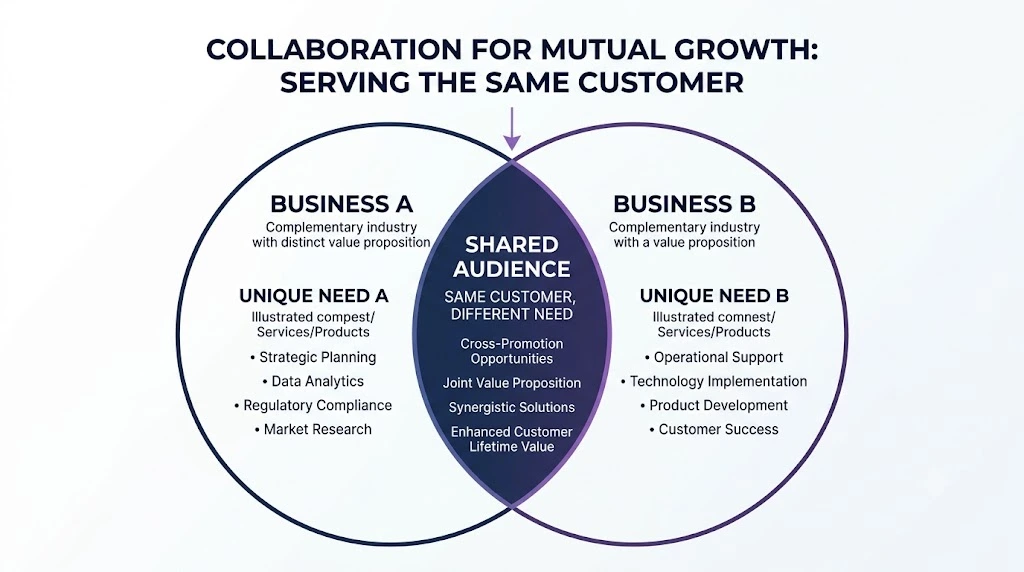
Simple diagram showing “Same Customer, Different Need” with two overlapping circles—one labeled “Business A,” one labeled “Business B,” overlap labeled “shared audience”—alt text: “non-competing strategic partnerships shared audience diagram”]
Why Win-Win Collaboration Beats Solo Marketing
Well-run non-competing strategic partnerships often outperform paid ads on cost alone. Paid ads get more expensive every year, and organic reach on social media keeps shrinking. That’s part of why so many small businesses struggle with rising acquisition costs. Meanwhile, a well-matched partnership can put your business directly in front of a warm, pre-qualified audience—for free, or close to it. Pairing this with a solid content marketing and SEO strategy gives you two low-cost growth channels working at the same time.
Here’s what makes partnerships different:
- Cost-effective acquisition. You’re not paying per click or per impression. You’re trading value with a business that already has the audience you want.
- Instant credibility. A recommendation from a trusted partner carries more weight than an ad ever will. People buy from businesses their friends, colleagues, or favorite local shops vouch for.
- Compounding reach. One good partnership often leads to introductions with two or three more. Ad campaigns don’t do that.
None of this means non-competing strategic partnerships are easier than paid marketing. They’re just a different kind of work—relationship work instead of budget work.
Real-World Pain Points in Non-Competing Strategic Partnerships (Reddit & Quora Insights)
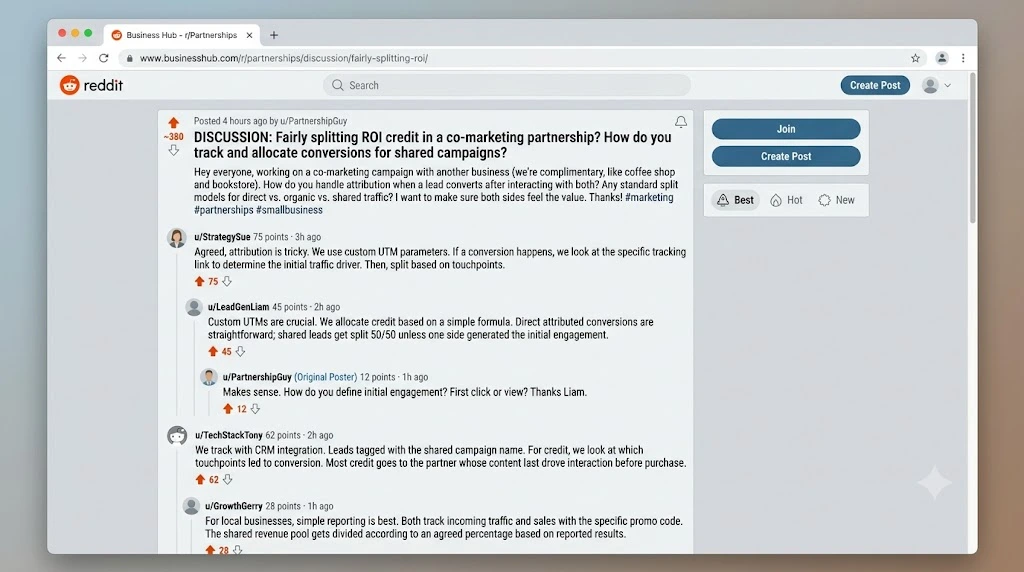
Before jumping into the framework, it’s worth addressing the questions people commonly ask in small business communities. Similar concerns come up often in spaces like r/smallbusiness, r/marketing, and Quora threads on B2B collaboration. Most partnership guides skip right past them.
“How do I reach out without sounding spammy?”
This is the single most common fear. Business owners worry that a cold outreach message will land in someone’s inbox and read exactly like the ten other pitches they got that week. Generic. Self-serving. Easy to ignore.
The fix isn’t a clever subject line, though. It’s specificity. A message that references the other business by name, mentions something true about their audience, and leads with an idea instead of a request reads completely differently from a template blast. This one shift is often what separates spammy outreach from real non-competing strategic partnerships. We’ll get into the exact wording later in this guide.
“What if the partner takes my leads and gives nothing back?”
This one comes from bad experience, not paranoia. A lot of first-time partnerships fail because one side does all the promoting while the other side quietly benefits without reciprocating.
The way around this is structure, not trust alone. Before any campaign goes live, both sides should agree on what “giving back” actually looks like—a newsletter mention, a set number of social posts, or a shared giveaway. Then put it in writing, even informally. Vague verbal agreements are where most non-competing strategic partnerships quietly fall apart.
“How do we measure ROI on cross-promotions?”
Attribution is genuinely hard here, and most guides gloss over it. Unlike a paid ad with a tracking pixel, a partnership referral often shows up as “a friend told me about you,” with no clean data trail behind it.
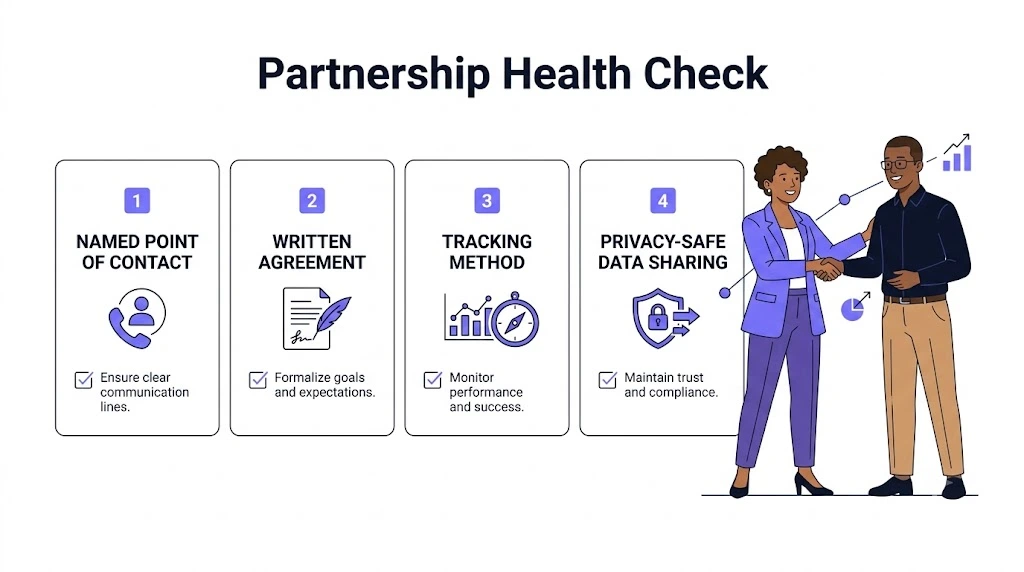
The workaround is low-tech but effective. Try unique discount codes per partner, dedicated landing pages, or a simple “How did you hear about us?” field at checkout. It won’t be perfect, but it’s enough to tell you which non-competing strategic partnerships are actually working. Small businesses running a few partnerships at once often lean on basic automation tools to track and manage leads instead of doing it all by hand.
Step-by-Step Framework to Build Non-Competing Strategic Partnerships
Step 1: Map Your Ideal Partner Profile (IPP)
Start by thinking about your customer’s timeline, not your industry. Who does your customer talk to right before they need you? Who do they turn to right after?
Here’s a quick way to map this. Write down your customer’s journey in three stages: before, during, and after they use your product or service. At each stage, list one or two businesses that show up naturally.
For example, if you run a moving company, your “before” partner might be a real estate agent. Your “after” partner might be a home cleaning service. None of them compete with you, yet all of them touch the same customer at a different moment.
Once you have a shortlist, you still need a way to decide who’s worth pursuing first. A simple Partner Fit Scorecard helps you compare candidates without relying on gut feeling alone. Score each business from 1–5 on the factors below, then add up the total.
| Factor | Score (1–5) |
|---|---|
| Same target audience | |
| Complementary offer (no overlap) | |
| Audience trust in that business | |
| Reach (email list, social following, foot traffic) | |
| Ability to promote you consistently | |
| Ease of collaboration (responsive, organized) |
25+—strong candidate, reach out first. 18–24—worth testing with a small campaign before committing further. Below 18—low priority for now; revisit later if your shortlist grows.
This turns a long list of “maybe” partners into a short, ranked list of businesses actually worth your first outreach email for non-competing strategic partnerships.
Step 2: Pitching with Value First
The biggest mistake in outreach is asking before offering. A message that opens with “we’d love to partner with you” tells the other business nothing about what’s in it for them.
Instead, lead with a specific idea. Something like, “I noticed your clients are usually looking for X right after working with you—here’s a simple way we could send them your way too.” That single shift, from asking to offering, changes how the message gets read—and it’s the difference between a pitch that gets ignored and one that starts real non-competing strategic partnerships.
Step 3: Structuring the Campaign & Co-Marketing Deliverables
Once a partner says yes, agree on the format before you agree on the timeline. Most non-competing strategic partnerships work best when they start with one clear deliverable rather than several at once. A few options that work well for small and mid-sized businesses:
- Co-branded webinars—one live session, two audiences, shared registration list.
- Bundle offers—a discount that only applies when customers use both businesses together.
- Guest newsletter swaps—each business writes a short feature for the other’s email list.
- Joint giveaways—a prize that requires following or engaging with both businesses to enter.
Pick one format to start. Trying to run three types of campaigns with a brand-new partner is usually where things fall apart.
Step 4: Legal & Operational Alignment
This step gets skipped constantly, and it’s usually the reason otherwise—promising non-competing strategic partnerships quietly dissolve after the first campaign.
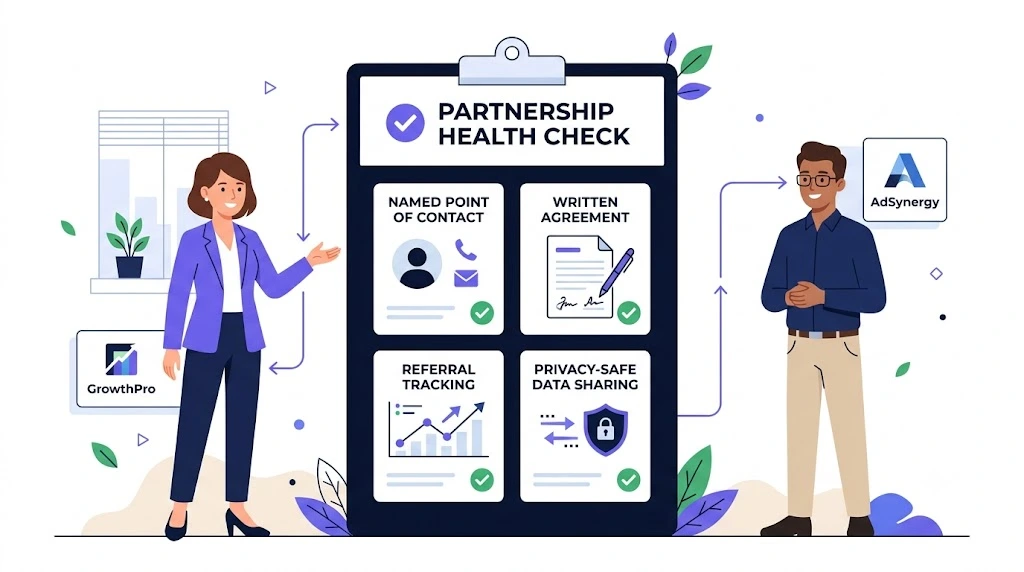
At minimum, put a short memorandum of understanding (MoU) in writing. Even a one-page document works. Cover who owns what data, how leads get shared, what happens with customer information under privacy regulations like GDPR, and who’s responsible for which deliverables.
For a simple local partnership, a basic written agreement is often enough to start with. It’s still worth having a professional review anything involving shared customer data, since legal requirements can vary by location and situation. Either way, get it in writing rather than leaving it as a verbal understanding.
High-Converting Outreach Email Template for Non-Competing Strategic Partnerships
Here’s a fill-in-the-blank template built specifically for pitching non-competing strategic partnerships to complementary business founders—not a generic partnership request.
Subject: Quick idea for [Their Business Name] + [Your Business Name]

Hi [Name],

I run [Your Business Name] — we help [your customer type] with [what you do].

I noticed a lot of your clients probably need [related need] right [before/after] working with you, which is exactly what we help with.

Here's a simple idea: [specific idea, e.g., "we send a discount code for your service to our clients after their first session, and you do the same for us"]. No cost on either side, and it's an easy way to bring more value to both our audiences.

Would you be open to a quick 15-minute call this week to see if it's a fit?

[Your Name]
[Business Name] | [Website/Contact]
Keep it under 150 words. The point is to make it easy to say yes, not to explain your entire business.
What to Do If They Don’t Reply
Silence doesn’t always mean no. Most business owners are simply buried in their own inbox, so a short, non-pushy follow-up sequence works better than one message and giving up.
- Day 3–4: Send a short, one-line follow-up referencing your original email—no need to repeat the full pitch.
- Day 7: Try a new angle or a more specific idea than the first email. Sometimes the original pitch just wasn’t concrete enough.
- Day 12–14: Send one final, polite follow-up. Make it easy for them to say “not right now” without feeling awkward.
- No response after that: Move on to the next candidate on your shortlist. Chasing a cold lead for weeks costs more than starting a new conversation with someone else—not every outreach turns into one of your non-competing strategic partnerships, and that’s fine.
Competitor Gap Analysis: What Most Guides Miss
Most articles on non-competing strategic partnerships stop at “find a partner and cross-promote.” A few things rarely get covered, even though they’re often the real reason partnerships fail:
Why most partnerships fail after week 2. It’s usually not because the idea was bad. It’s because nobody owned execution. Both sides assume the other one is posting, sending the email, or following up. Without one named point of contact on each side, momentum on non-competing strategic partnerships dies fast.
Micro-partnerships vs. enterprise partnerships. Big brand partnerships involve legal teams, months of negotiation, and formal contracts. Most small business guides borrow that playbook for non-competing strategic partnerships, and it simply doesn’t fit. A local gym and a local nutritionist don’t need a 20-page agreement. They need a five-minute conversation and a shared spreadsheet to track referrals.
Cross-promotion and data privacy. Sharing customer lists, even informally, can raise GDPR or other local privacy law concerns. It depends on your jurisdiction and how the data is used.
A generally safer approach is to avoid handing over a raw customer list. Instead, each business can send its own audience a message on the other’s behalf or use opt-in forms where the customer explicitly agrees to be shared.
This isn’t a substitute for legal advice. If you’re unsure how privacy rules apply to your situation, it’s worth checking with a professional. Reviewing the European Commission’s official data protection guidance is a good starting point if GDPR applies to your business. Combining this cautious approach with the content marketing strategy covered here helps keep your combined outreach consistent across both audiences.
Frequently Asked Questions About Non-Competing Strategic Partnerships (PAA & Quora)
How do you identify non-competing businesses?
Look at your customer’s journey, not your industry category. Any business your customer naturally uses right before or after they use you—without your two services overlapping—is a strong candidate for non-competing strategic partnerships.
What is an example of a strategic partnership between non-competing companies?
A dentist and an orthodontist referring patients to each other, or a wedding venue and a catering company sharing the same client list for the same event, are both common examples of non-competing strategic partnerships.
How do you split revenues or costs in a co-marketing campaign?
Most small, non-competing strategic partnerships don’t split revenue directly—they split visibility. If money does change hands, such as an affiliate commission on referred sales, agree on the percentage and payment schedule in writing before the campaign starts.
What makes a cross-promotion successful?
A clear, specific offer, one shared point of contact on each side, and a simple way to track where new customers came from. Non-competing strategic partnerships that skip any one of these three tend to fizzle out quickly.
Conclusion: Start Building Non-Competing Strategic Partnerships
Non-competing strategic partnerships work because they skip the part of marketing that costs the most—getting a stranger’s attention. Instead, you borrow trust that’s already been built.
The businesses that do this well aren’t the ones with the biggest budgets. They’re the ones who mapped their customer’s journey, reached out with something specific to offer, and put a simple agreement in writing before things got busy. That’s really all non-competing strategic partnerships come down to.
Take five minutes today and list three businesses your customers already use—right before or after they come to you. That short list is where your next partnership starts.