
How to Increase Revenue Per Customer Without Raising Prices
Acquiring new customers can be more expensive than generating additional revenue from existing customers. Yet most small-business owners spend all their energy chasing new leads while the real growth opportunity is sitting quietly in their existing customer list.
This guide shows you how to increase revenue per customer without touching your price tag. You’ll learn three practical levers—bigger orders, more frequent purchases, and smarter add-ons—plus a simple 30-day plan to put them into action.

What Does Revenue Per Customer Mean?
Revenue per customer is simply the average amount each customer spends with your business over a given period. It’s different from a single order value because it captures the full relationship—every purchase, upgrade, and repeat visit combined.
Revenue Per Customer vs. Average Order Value
Average order value (AOV) looks at one transaction. Revenue per customer looks at the whole picture—how much a person spends across multiple visits or subscriptions over time.
Why Existing Customers Are a Revenue Opportunity
Existing customers already trust you. They’ve bought once, so the hardest part — building credibility — is done. Selling to them costs less and converts faster than any cold outreach campaign ever will.
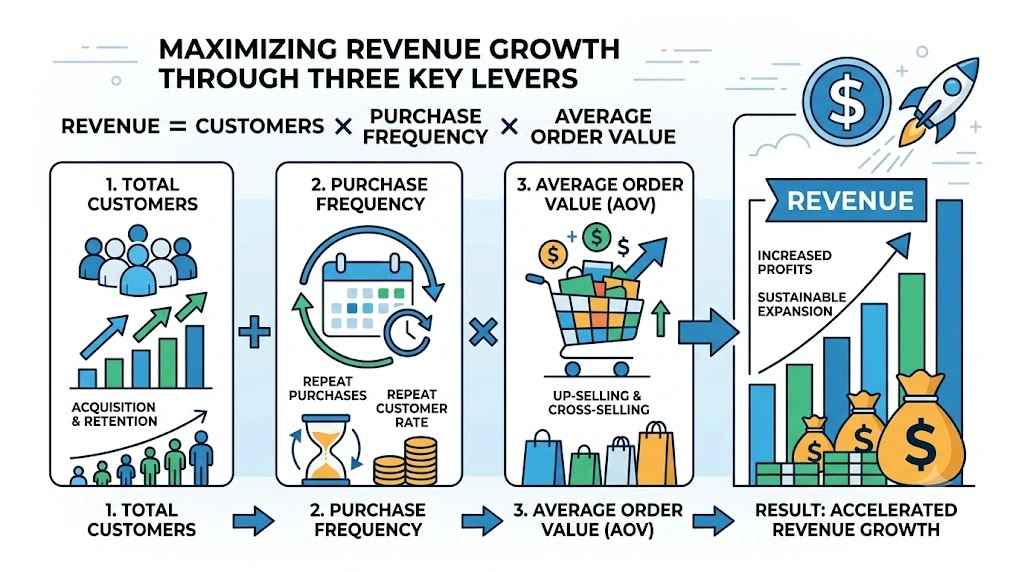
The Basic Revenue Formula
Revenue = Number of Customers × Purchase Frequency × Average Order Value
If you have 200 customers who buy twice a year at $50 per order, that’s $20,000 in annual revenue. Nudge either the frequency or the order size, and revenue climbs—without adding a single new customer.
How to Increase Revenue Per Customer Without Raising Prices
The fastest path to more revenue isn’t a price hike—it’s helping customers get more value from what you already offer. Here are eight practical ways to do it.
1. Add Relevant Upsells
Offer a premium version, an additional service, or a complementary upgrade at the moment of purchase. A landscaping company, for example, might upsell a seasonal maintenance package alongside a one-time lawn treatment.
2. Use Cross-Selling to Solve the Next Need
Cross-selling means suggesting related products or “frequently bought together” items. A bakery selling a custom cake can cross-sell matching cupcakes or a dessert table setup for the same event.
3. Create Bundles Instead of Discounting
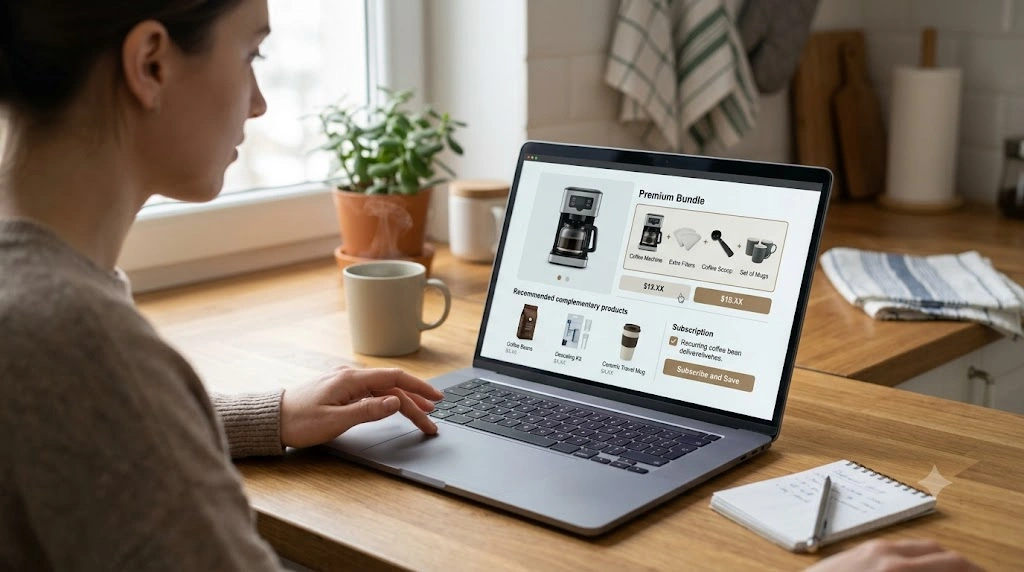
Bundling multiple products or services into one package increases perceived value without cutting your margin the way a blanket discount does. Tiered packages—basic, standard, and premium—also make it easy for customers to spend more by choosing a higher tier.
4. Increase Purchase Frequency
Replenishment reminders, seasonal follow-ups, and reorder campaigns keep your business top of mind. A pet supply store texting a reminder when food is about to run out is a simple, effective example.
5. Turn One-Time Customers Into Repeat Customers
A short post-purchase email, a small loyalty incentive, or a personalized recommendation can turn a single sale into an ongoing relationship. Most businesses lose this opportunity simply by going silent after checkout.
6. Add Recurring Revenue Options
Subscriptions, maintenance plans, retainers, and memberships create predictable income and naturally raise revenue per customer over time, since customers commit rather than deciding fresh each time. Predictable revenue like this also makes it easier to scale a small business without burning cash, since you’re not relying on a constant stream of new customers to fund growth.
7. Add Useful Services Around Your Core Product
Setup, training, delivery, and support services solve real friction points for customers—and they’re usually easy to price separately from your core offer.
8. Create Targeted Offers for Existing Customers
Segment your list and identify your highest-value customers. A relevant, personalized offer will always outperform a blanket promotion sent to everyone.
How to Choose the Right Revenue Strategy
Not every lever fits every business. The table below helps you match the right tactic to the problem you’re actually facing.
| If your problem is… | Try… |
|---|---|
| Customers buy only one item. | Cross-selling |
| Orders are too small. | Upselling or bundles |
| Customers rarely return. | Repeat-purchase campaigns |
| Revenue is unpredictable. | Recurring offers |
| Customers need extra help. | Service add-ons |
Pick one problem at a time. Trying to fix everything at once usually means nothing gets fixed well.
How Much More Revenue Can You Generate Per Customer?
Numbers make this real. Say you have 200 customers currently spending an average of $100 each—that’s $20,000 in total revenue.
Now raise that average customer spend to $120 through one well-placed upsell or bundle. With the same 200 customers, revenue climbs to $24,000. That’s an extra $4,000 without acquiring a single new customer or changing a single price.
This is the quiet power of focusing on existing relationships: small, consistent increases compound fast across your whole customer base.
Common Mistakes That Reduce Revenue Per Customer
Even well-intentioned efforts can backfire. Watch for these five mistakes.
Pushing Irrelevant Upsells
An upsell that doesn’t match the customer’s actual need feels like a sales pitch, not a helpful suggestion—and it erodes trust.
Discounting Everything
Constant discounts train customers to wait for the next sale instead of buying at full value, quietly shrinking your margins over time.
Offering Too Many Choices
Too many options create decision fatigue. Customers often choose nothing rather than sort through a long list of add-ons.
Ignoring Existing Customers After the First Sale
Going silent after checkout is a common reason repeat revenue never materializes.
Measuring Revenue Without Checking Profit Margin
Revenue can grow while profit shrinks if the added items carry higher costs. Always check margin alongside revenue, not instead of it—if you’re not sure where to start, here’s how to calculate your gross profit margin in a few simple steps.
How to Measure Revenue Per Customer
Once you’ve made changes, tracking the right numbers tells you whether they’re actually working.
Track these metrics consistently:
- Revenue per customer
- Average order value
- Purchase frequency
- Repeat purchase rate
- Customer lifetime value
- Gross profit per customer
These same numbers feed directly into your small business budget, so tracking them consistently makes your next planning cycle far more accurate.
Revenue Per Customer Formula
Total customer revenue ÷ Number of customers = Revenue per customer
Track Changes Over Time
Compare month over month rather than looking at a single snapshot. A useful framework for benchmarking these metrics against broader retention economics comes from Harvard Business Review’s research on customer lifetime value and retention economics—a short read worth bookmarking if you want to go deeper into the numbers behind customer retention. Give it a read, then come back and apply the framework to your own numbers this week.

A Simple 30-Day Plan to Increase Revenue Per Customer
You don’t need a complex strategy to get started—just four focused weeks.
Week 1: Analyze existing customers. Identify your best-selling products, your repeat customers, and any common purchase combinations worth building an offer around.
Week 2: Create one upsell or cross-sell. Keep it relevant to what customers already buy, and test it with a small segment before rolling it out fully.
Week 3: Launch a repeat-purchase campaign. A simple email sequence with a follow-up and a reorder reminder is enough to start.
Week 4: Measure the results. Check revenue per customer, average order value, repeat purchases, and gross profit to see what actually moved the needle.
This same principle—getting more from what you already have—is also how you scale a small business without increasing operating costs: grow revenue per customer first, and you’ll need far less new spending to hit your next milestone.
FAQ
How can I increase revenue per customer without raising prices?
Focus on upselling, cross-selling, bundling, and increasing purchase frequency. Each of these adds value to the customer relationship instead of raising what you charge for the same item.
What is the easiest way to increase revenue per customer?
A single, relevant upsell offered at checkout is usually the fastest and simplest place to start, since it requires no new product development.
How do upselling and cross-selling increase revenue?
Upselling encourages a customer to choose a higher-value version of what they’re already buying, while cross-selling introduces a complementary item—both increase the size of a single transaction.
How do I increase customer spending without discounts?
Bundle related products or services together, add recurring options like subscriptions, and offer targeted, relevant recommendations instead of broad price cuts.
What is the difference between revenue per customer and customer lifetime value?
Revenue per customer typically looks at a defined period, like a month or year, while customer lifetime value estimates total revenue across the entire relationship with that customer.
Conclusion
Don’t start by chasing more customers. Start by looking at how much value you’re generating from the customers you already have.
The formula is simple: combine a higher average order value, more frequent purchases, and relevant additional offers, and revenue grows—without a single price increase. Pick one lever from this guide, apply it this week, and measure what changes.
Ready to put this into practice? Explore more growth strategies built for small businesses on GoFundScale and start turning your existing customers into your biggest revenue driver.