How to Grow a Business with Content Marketing & SEO in 2026 (The Complete Playbook)

If you’ve ever published a blog post, waited three weeks, and then stared at a traffic graph that still looks like a flat line—you already know the frustration that brings most business owners to this page.
content marketingContent marketing & SEO is one of the most effective long-term strategies for generating consistent organic traffic, qualified leads, and sustainable business growth. This guide is written for small business owners, solo founders, and lean marketing teams who already have a website but aren’t getting real leads from it. By the end, you’ll have a clear, step-by-step Content Marketing & SEO strategy to grow your business in 2026, covering competitor research, content structure, keyword planning, and a realistic 30/60/90-day roadmap you can actually follow.
We’ll walk through what’s changed recently, where most businesses go wrong, and how to build a system that keeps working long after you’ve hit publish.
Why Content Marketing & SEO Still Matter More Than Ads in 2026
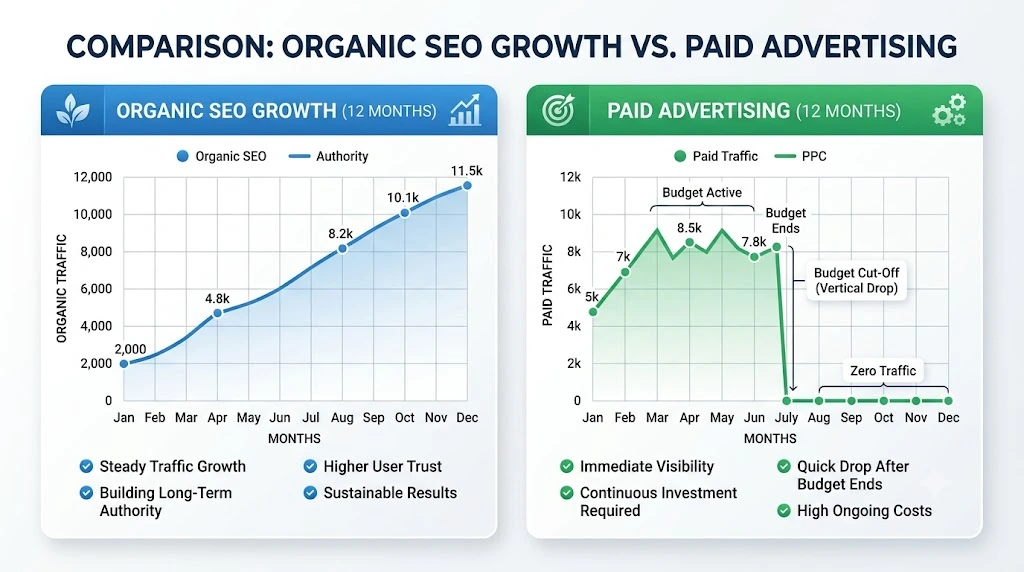
Content marketing & SEO delivers long-term business growth, while paid ads get you attention only while you’re paying. The moment you stop, the traffic stops with it. Content marketing and SEO work differently—a well-optimized blog post can keep bringing in visitors, leads, and customers for years after you hit publish.
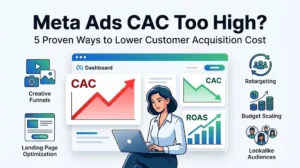
That compounding effect is exactly why search-driven growth remains one of the most cost-efficient channels available to small and mid-sized businesses, especially those competing against bigger, better-funded rivals. It’s the same reason many owners eventually look for ways to bring customer acquisition costs down once ad spend stops delivering the return it used to—content is what fills that gap.
Google’s public guidance increasingly emphasizes helpful, reliable, people-first content, while thin, generic, or unoriginal pages tend to struggle to gain visibility. That’s a meaningful shift from a few years ago, and it changes what “good SEO content” actually looks like in practice.
What Actually Changed in SEO and Content Marketing in 2026?
The word “2026” gets thrown around a lot in marketing blog titles without much substance behind it—so here’s what’s genuinely different right now:
H3: AI-Powered Search Is a Real Discovery Channel
Google’s AI Overviews and assistants like ChatGPT and Perplexity are pulling answers directly from web content. According to Google’s own documentation on AI features in Search, there’s no separate technical standard to chase—the same SEO fundamentals that help a page rank normally, like clear structure and easy crawlability, are what make it eligible to be cited in these AI-generated summaries too.
H3: Search Intent Matching Matters More Than Keyword Density
Ranking depends less on repeating a phrase and more on proving your page answers the question behind the search, fully and clearly.
H3: First-Hand Experience Is a Ranking Signal
Google’s quality guidelines put real weight on content that shows genuine, first-hand experience—case studies, screenshots, specific numbers—rather than generic advice that could apply to any industry.
H3: Topical Authority Beats One-Off Posts
A single great blog post helps less than it used to. A cluster of interconnected, useful pages on a subject builds far more trust with search engines and with readers.
H3: Content Quality Matters More Than Publishing Volume
There’s no fixed rule about how many posts you need per month. What tends to hold true is that a smaller number of deeply useful, well-optimized posts can outperform a high volume of shallow content.
The Real Content Marketing & SEO Problems Business Owners Face
Before jumping into tactics, let’s name the problem honestly—because most people searching “how to grow a business with content marketing and SEO” aren’t beginners. They’ve tried something already, and it hasn’t worked. Talk to enough small business owners and the same frustrations come up again and again:
- “I’m posting content, but nothing is happening.” Inconsistent publishing with no underlying keyword strategy behind it.
- “I paid an agency for six months and got nothing but reports.” Agencies chasing vanity metrics like traffic or impressions instead of qualified leads.
- “SEO feels like a black box I can’t control.” Constant algorithm updates make results feel unpredictable and fragile.
- “I don’t even own my content.” Businesses discovering they don’t have real ownership or access to the content and website assets an agency built for them.
- “I don’t have the budget or time to compete with big brands.” Solo founders and small teams feel outgunned by competitors with in-house marketing departments.
Almost all of this comes down to fixable structural mistakes rather than bad luck. Let’s work through how to fix them.
The goal of content marketing & SEO isn’t simply to generate more traffic—it’s to turn relevant search traffic into leads and customers.
Step 1: Build a Content Marketing & SEO Strategy Before You Write
The single biggest mistake businesses make is publishing content first and thinking about SEO later. By the time an “optimize this later” post exists, the structural decisions that determine whether it can ever rank have already been made—and undoing that is harder than doing it right from the start.
H3: Define Your Audience and Buyer Journey
Map out who you’re writing for at each stage:
- Awareness stage – they have a problem, not yet a solution in mind
- Consideration stage – they’re comparing options (this is where competitor gap content wins)
- Decision stage – they’re ready to buy and comparing you directly against alternatives
H3: Do Keyword Research Before You Write a Single Word
Identify the exact questions and phrases your audience searches for. Prioritize keywords with real buying intent over keywords that just look impressive in a traffic report.

Step 2: Find and Close the Competitor Content Gap
This is the step most businesses skip entirely, even though it’s one of the most important parts of a successful content marketing & SEO strategy. and it’s often the fastest way to outrank competitors who’ve been publishing longer than you.
H3: What Is a Competitor Content Gap?
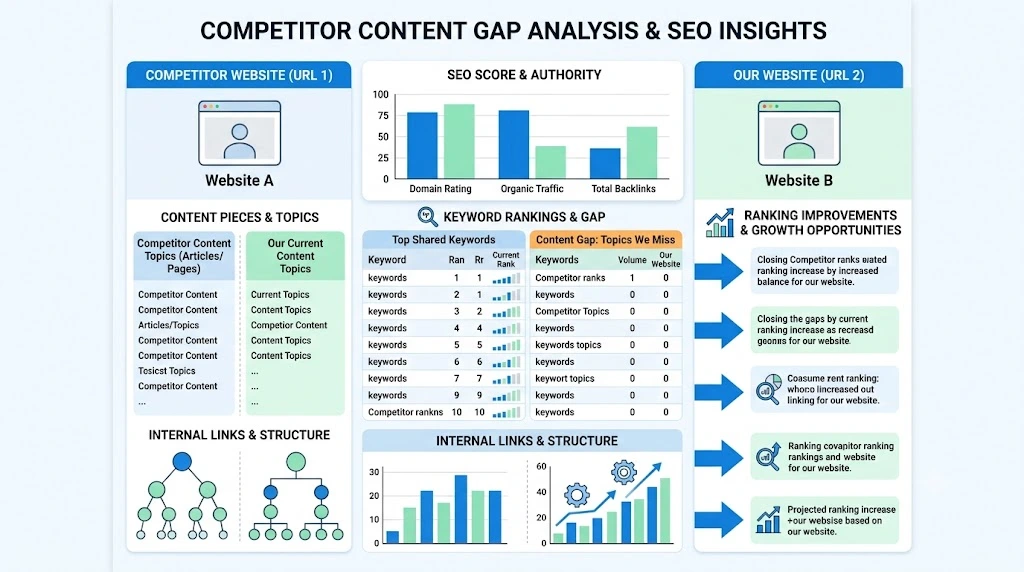
It’s the list of topics, questions, and keywords your competitors rank for that you don’t have content covering at all, or where your existing content is thinner, older, or less useful than theirs.
H3: How to Find It
- List your top 3–5 organic competitors (not just the businesses you compete with offline)
- Identify which of their pages bring in the most search traffic
- Find topics they rank for where your site has nothing or something outdated
- Look for questions they haven’t answered well—that’s your opening
H3: A Simple Example
Say a competitor ranks well for “how to scale a small business,” but your site has nothing on the topic. Rather than writing a similar surface-level post, you build a more complete guide covering hiring, systems, and cash flow, and link it internally to related posts, like one on practical automation strategies for small businesses. Depth plus deliberate internal linking is usually enough to outrank a thinner, older competitor page over time.
Step 3: Answer What People Are Actually Asking Google
Google’s “People Also Ask” box is one of the most underrated free research tools available. For a topic like business growth through content marketing and SEO, a few recurring questions come up often—we’ve covered them in the FAQ section toward the end of this guide, written in the exact phrasing people tend to search for.
Step 4: Build Topical Authority, Not Just Individual Posts
Google increasingly rewards domains, not just individual pages, that demonstrate deep, comprehensive expertise on a subject.
H3: Create Content Clusters
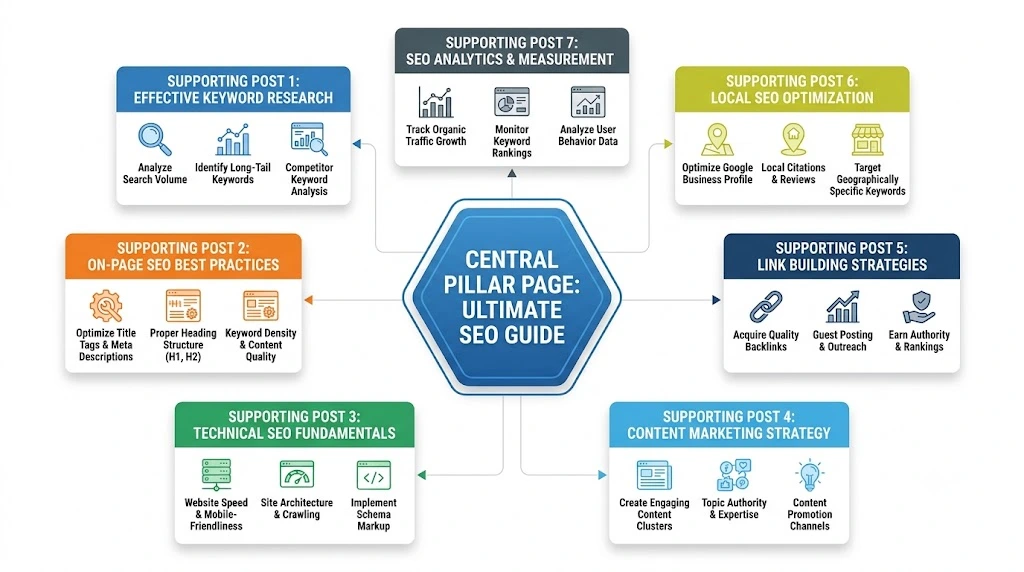
Build a core “pillar” page around your main topic, then link out to supporting posts that go deeper into related subtopics. This internal linking structure signals to search engines that your site is a genuinely comprehensive resource.
H3: Update Old Content Instead of Only Publishing New
Refreshing and expanding older posts with current data, examples, and clearer structure is often faster and cheaper than starting from zero, and it protects rankings you’ve already earned.
H3: Reference Credible Outside Sources Too
Linking out to genuinely authoritative sources, like a well-known industry study or a tool’s official documentation, when it strengthens your point signals honesty to readers. Done selectively, it builds trust rather than losing it—for example, Content Marketing Institute’s annual B2B research is a solid, citable source if you’re making a point about industry-wide content marketing trends or budgets.
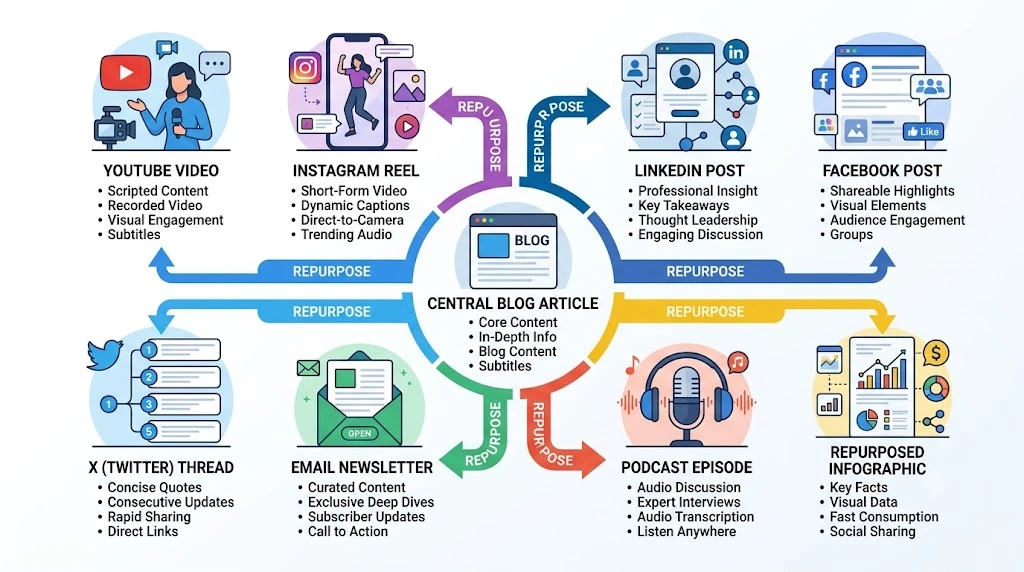
Step 5: Diversify Your Content Formats
Content marketing & SEO work best when you diversify your content across multiple formats instead of relying only on blog posts.
- Video—embedded video improves on-page engagement signals and taps into YouTube as a major search engine in its own right
- Email newsletters—consistently one of the highest-ROI content channels, especially for nurturing an existing audience
- Short-form social content—repurposed from long-form posts to extend reach without extra production effort
- Podcasts—increasingly effective for building thought leadership, especially in B2B
Repurposing one strong piece of content into a few formats is usually a better use of time than creating each one from scratch.
Step 6: Track Your Content Marketing & SEO Results
Traffic and impressions feel good in a report, but they don’t pay the bills. The metrics that actually indicate growth are
- Qualified leads generated from organic content
- Conversion rate of organic visitors
- Rankings for commercial, buying-intent keywords
- Return visitors and email signups from content
If your reporting only ever talks about traffic, ask harder questions about what that traffic is actually doing for the business.

Your 30/60/90-Day Content Marketing & SEO Roadmap
Turning your content marketing & SEO strategy into an execution plan makes it much easier to achieve sustainable growth.
H3: Days 1–30: Research and Planning
- Complete keyword research focused on buying-intent terms
- Run a competitor content gap analysis
- Map out your pillar topic and 6–8 supporting subtopics
- Set a realistic, sustainable publishing schedule
H3: Days 31–60: Build and Publish
- Publish your pillar page
- Publish the first wave of supporting posts
- Interlink everything deliberately—pillar to supporting posts, and supporting posts to each other
- Repurpose each post into at least one additional format
H3: Days 61–90: Refine and Optimize
- Update older, underperforming pages with better structure and current information
- Pursue a small number of relevant backlinks or outbound mentions
- Review conversion rates, not just traffic, and adjust calls to action accordingly
- Double down on whichever topics are already showing early traction
Common Mistakes That Quietly Kill Content Marketing & SEO Results
- Publishing inconsistently, then giving up after a few underperforming posts
- Targeting keywords with no real search intent behind them
- Ignoring on-page structure, like headings, internal links, and page speed
- Treating SEO as a one-time project instead of an ongoing system
- Losing ownership or access to content and site assets built by an outside agency
- Chasing every new trend instead of executing a few core tactics consistently
Frequently Asked Questions
H3: How long does content marketing take to show results?
Most SEO-driven content starts showing measurable traction within 3–6 months, with results compounding as your site builds topical authority.
H3: Is content marketing worth it for a small business?
Generally, yes. It’s one of the more cost-effective growth channels available, since a single well-optimized page can keep generating leads long after the initial time investment.
H3: What’s the difference between content marketing and SEO?
Content marketing is the material—blogs, videos, and guides. SEO is the structure and optimization that helps that material get found. Neither works particularly well without the other.
H3: How much content do I need to publish to see SEO growth?
There’s no fixed number. Consistency and quality matter more than volume—a handful of deeply useful, well-optimized pieces will often outperform a large stack of thin, generic posts.
Final Thoughts on Content Marketing & SEO Growth
There’s no single blog post or trick that guarantees success. Content marketing & SEO work when you consistently publish valuable content, optimize it for search engines, and measure real business results.
and anyone promising that isn’t being straight with you. What actually works is fairly ordinary: understand your audience, close the gaps your competitors have left open, answer the real questions people are asking, build genuine topical authority, and track outcomes that matter to your business.
Follow the roadmap above consistently through 2026, and content marketing and SEO will become less of a cost you’re unsure about and more of a steady, compounding source of growth for your business.